


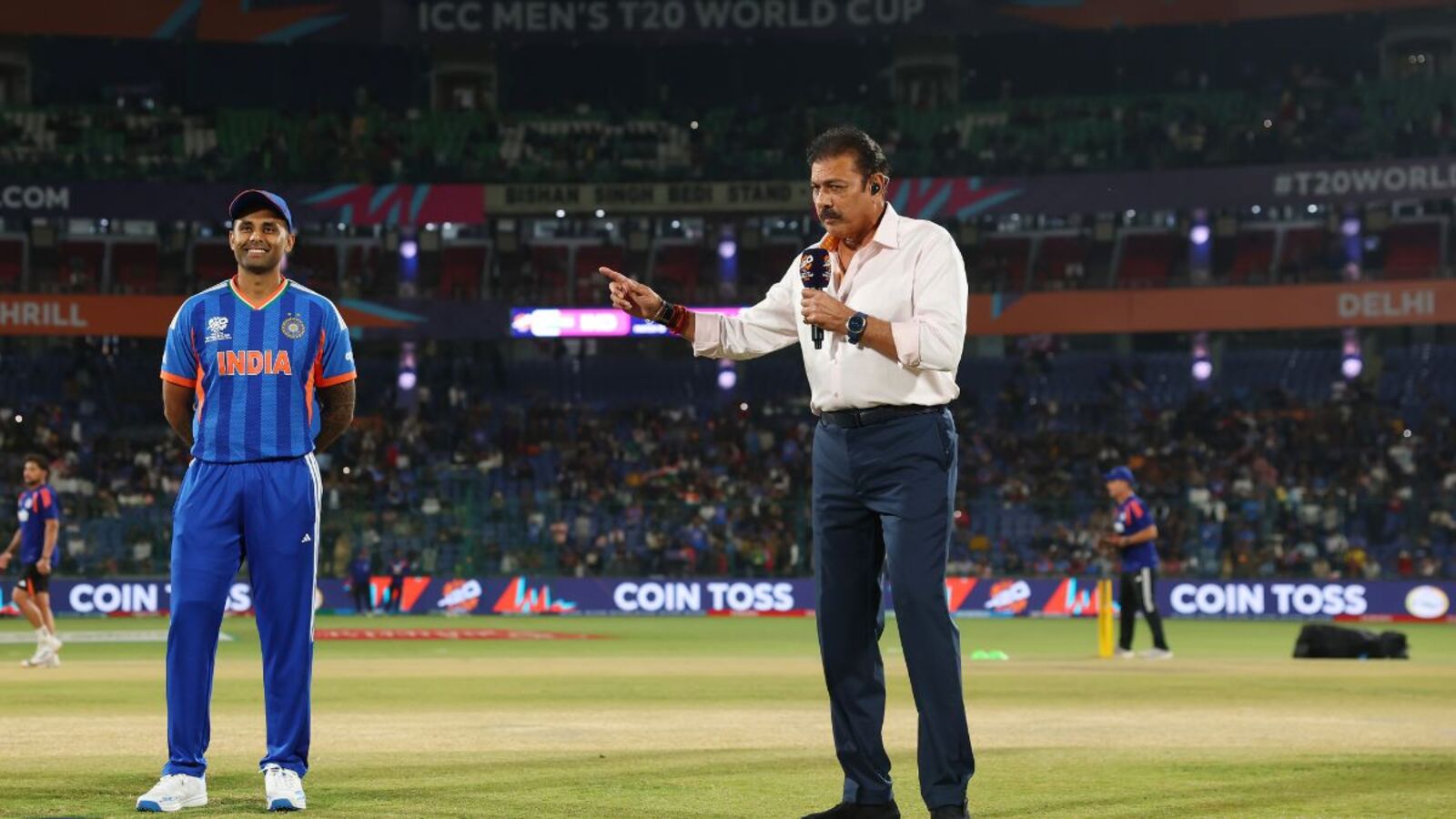
Commentator Ravi Shastri has shared his thoughts on who might succeed Suryakumar Yadav as India’s T20I captain. This brings new interest to the captaincy discussion as India prepares for the upcoming ICC Men’s T20 World Cup cycle (2026-28).
Suryakumar Yadav performed well as captain, leading India to defend their T20 title at home for the first time. He scored 242 runs in nine matches, with an average of 30.25 and a strike rate of 136.72. This included a vital score of 84* in the opening match against the USA at Wankhede, where India faced tough moments.
Shastri mentioned that India’s choice for a new captain might depend on Suryakumar’s performance in upcoming matches.
“India might be looking for a new captain for the next T20 World Cup (in 2028), depending on how Surya performs over the next couple of years,” Shastri stated during an interview with Sanjana Ganesan on The ICC Review.
“Sanju Samson also has positioned himself for a leadership role due to his past experience with Rajasthan Royals.”
“He is a key player in the lineup, known for his aggressive batting. I believe we are just seeing the beginning of what Sanju will showcase in the next two or three years.”
Initially, Samson did not start the tournament as India preferred Ishan Kishan to open with Abhishek Sharma. However, when his chance arose, Samson took full advantage.
Despite only playing five matches, Samson emerged as the third-highest run-scorer in the tournament, amassing 321 runs with an average of 80.25 and a strike rate of 199.37, including three half-centuries.
Samson’s experience in leadership is notable. As captain of Rajasthan Royals (RR), he led in 67 matches, securing 33 wins and suffering 32 losses, resulting in a win percentage of 49.25.
“I believe he has addressed any doubts about his capabilities. The talent has always been there, and people were often let down by his performances,” Shastri noted.
“But this season, considering his showing in the T20 World Cup where he played key roles to help secure victories in crucial matches, he has demonstrated the growth and maturity needed for potential future leadership.”